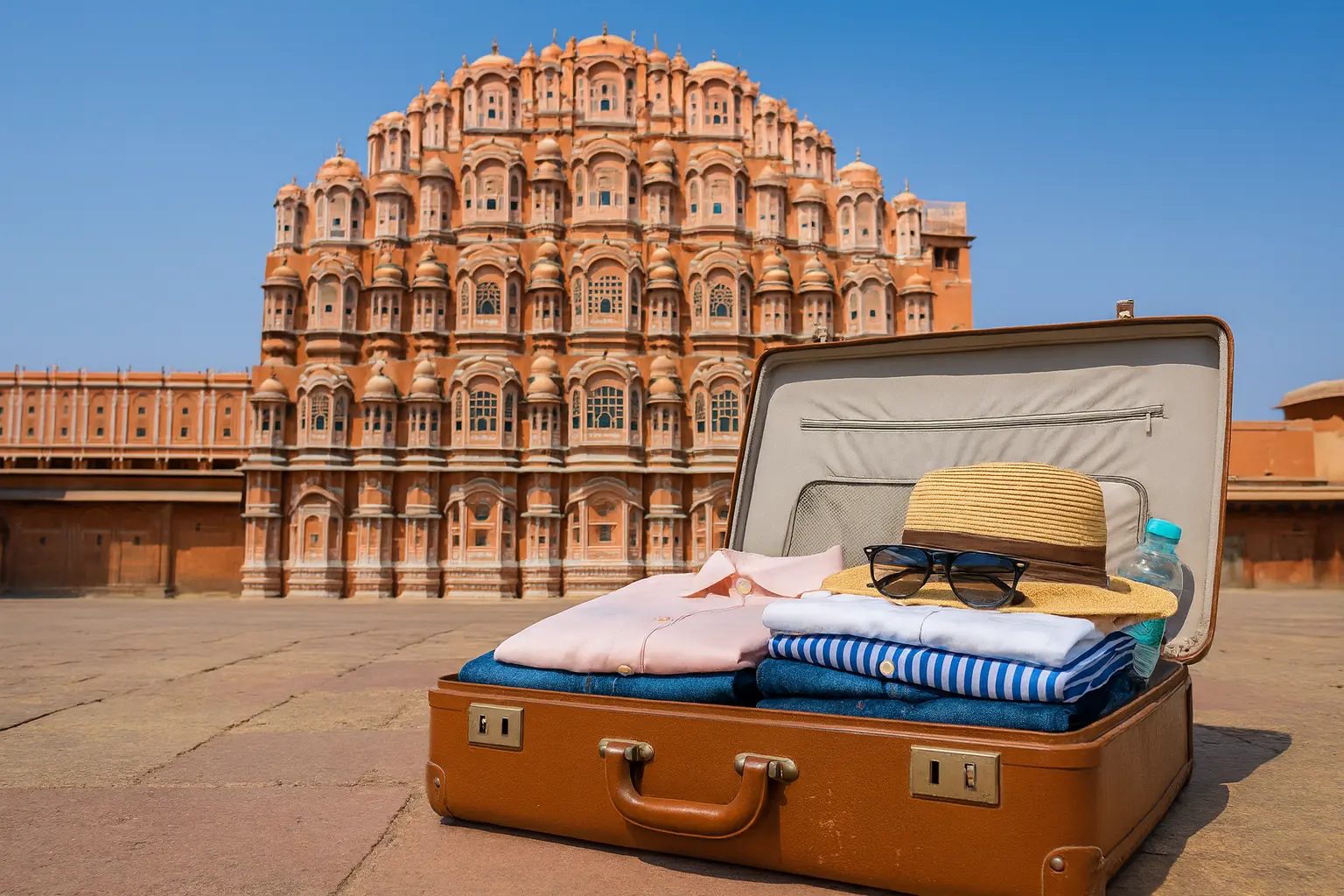

For Jaipur, pack for your travel month and the places on your itinerary: airy clothes for hot afternoons, a warm layer for winter mornings, and footwear that can handle fort steps. I have organised this researched packing guide around those decisions rather than a long list of everyday toiletries.
Quick Summary: What to Know Before You Pack
- Weather: winter days and nights need different layers. Historical January averages are about 22.5°C by day and 7.8°C at night; late spring is much hotter. Check your actual dates before packing.
- Temples and monuments: carry clothing that covers shoulders and knees for religious visits. Remove footwear where required. Do not assume the same rules apply throughout a fort, palace and temple.
- Payments: carry small rupee notes alongside a working digital payment method. Test your payment setup before relying on it for a full sightseeing day.
- One useful extra: a lightweight scarf or shawl adds shoulder coverage and a removable layer. This is a practical recommendation, not a claim about what most travellers forget.
Jaipur Packing by Season
The figures below are rounded historical climate values from IMD’s Climate of Jaipur, not a forecast for your trip. “Day” refers to daily maximum temperatures and “night” to daily minimum temperatures. Ranges span the months shown; individual days can fall outside them.
| Month range | Day temperature | Night temperature | Fabric and layers | Footwear |
|---|---|---|---|---|
| December–February | About 23–26°C | About 8–11°C | Cotton base, fleece or sweater, warm jacket as forecast requires | Closed shoes and socks |
| March | About 32°C | About 16°C | Loose cotton or linen; light evening layer | Breathable walking shoes |
| April–May | About 37–41°C | About 22–28°C | Loose light cotton or linen, sun-covering sleeves | Breathable shoes already broken in |
| June | About 39°C | About 27°C | Light clothes plus compact rain cover | Grip soles and spare socks |
| July–September | About 32–34°C | About 23–26°C | Quick-drying clothing, umbrella or light rain shell | Grip soles suited to wet surfaces |
| October–November | Roughly 35°C falling to 27°C through the period | Roughly 21°C falling to 11°C through the period | Daytime cotton, removable evening layer | Walking shoes; socks for cooler starts |
Do not pack for Rajasthan as though it has one temperature all year. In winter, choose your jacket around early departures and outdoor evenings. In the hot months, favour sleeves and a hat that provide shade without trapping heat. During the monsoon, allow for wet shoes and an extra drying cycle for laundry.
What to Wear at Amber Fort, Birla Mandir and City Palace
- Amber Fort: prioritise grip and freedom of movement for the hill approach, steps and courtyards. Carry a hat, water and a light shoulder-covering layer. Follow separate rules when entering a shrine within the complex.
- Birla Mandir: plan a modest outfit with shoulders and knees covered and shoes that are easy to take off. Follow entrance instructions on footwear, photography and any additional requirements.
- City Palace: choose breathable sightseeing clothes and shoes for hard surfaces. Keep a cover-up in your day bag if your route includes religious spaces. Check the conditions of the specific tour you book.
Coverage is a useful packing default for temple visits, not evidence that every Jaipur monument has an identical published dress code. A scarf can cover shoulders, but it does not replace trousers or a longer skirt when lower-body coverage is needed.
A Practical Three-Day Jaipur Packing List
For a short trip with no laundry planned, this is a starting point per person. Adjust for your own routine, hotel facilities and baggage allowance.
- Three breathable tops, two pairs of trousers or one pair plus a below-knee skirt, underwear and socks for each day, and sleepwear.
- One temple-ready outfit and one lightweight scarf or shawl. These can overlap with your sightseeing clothes.
- One pair of broken-in walking shoes. Add compact sandals only if you will use them at the hotel or for short outings.
- Winter: a sweater or fleece and suitable outer layer. Monsoon: a compact umbrella, rain cover and a separate bag for damp clothes.
- A refillable bottle for safe drinking water, hat and sunglasses; bring your usual sun protection and personal-care products.
- Your regular prescription medicines in original packaging, the prescription if needed, blister dressings and any personal essentials that are difficult to replace.
- Phone, compatible charger and a power bank for maps, tickets and payments. Save your hotel address and bookings for offline access.
- Photo ID, cards and some rupee cash. International visitors should also carry the travel documents required for their own journey.
What to Carry in Jaipur Bazaars
For Johari Bazaar, Bapu Bazaar and Tripolia Bazaar, keep your daily bag small enough to hold in front of you in a crowd. Use a zipped compartment for your phone and wallet rather than an open tote or rear trouser pocket. Keep backup cash and a second card separately from your main wallet.
A reusable shopping bag saves carrying several loose packages. Keep room in your luggage for purchases and ask for protective packing for fragile items. A scarf can help with sun and loose dust, but it is not a substitute for a properly fitted protective mask when air quality is poor.
Carry small notes as a backup even when you normally pay by UPI. Check the payee and amount before approving a payment, and confirm that it succeeded before leaving. Do not assume a card machine or reliable mobile signal is available at every stall. The cash you carry is a payment backup, not a fixed daily trip budget.
Extra Packing Checks for Overseas Visitors
Check that your phone and payment arrangements work in India before relying on them. NPCI’s UPI One World programme provides a tourist-wallet route for eligible visitors, subject to the provider’s onboarding requirements. Keep a card and cash alternative instead of assuming that your usual overseas wallet can scan Indian UPI codes.
Bring a travel adapter suited to your accommodation and check the input-voltage label on your devices. Keep your passport, visa or entry permission where applicable, hotel booking and insurance details accessible offline. For children, add their specific supplies and a spare outfit to the day bag rather than leaving everything in the suitcase.
What You Can Leave at Home
Skip untested shoes, multiple formal outfits and duplicate gadgets unless your itinerary needs them. Do not rule out a warm jacket simply because Jaipur is in Rajasthan: winter mornings can justify one. Pack essential toiletries in the quantity you need; ordinary replacements are available in the city, but a particular brand may take time to find.
Frequently Asked Questions About Packing for Jaipur
What should I pack for Jaipur in December and January?
Pack daytime cotton layers, long trousers, closed shoes, socks and a warm jacket or fleece for early starts and evenings. Historical IMD averages put January near 22.5°C by day and 7.8°C at night. Cold spells can be colder, so check the forecast before choosing your final outer layer.
Can I wear shorts at Amber Fort and City Palace?
For general sightseeing, choose clothes that let you climb steps and walk comfortably. Do not treat the whole fort or palace as having the same rules as a temple. Carry long trousers or a below-knee skirt and a shoulder-covering layer for religious spaces, and follow the rules posted at each entrance.
Can I rely on UPI in Jaipur bazaars or do I need cash?
Use UPI where the seller accepts it, but keep small rupee notes for cash-only purchases, tips and payment failures. Carry a backup card separately. Overseas visitors should arrange an eligible tourist UPI wallet in advance if needed; a foreign payment app does not automatically work with every Indian merchant QR code.
Are sandals enough for Amber Fort, or should I bring walking shoes?
Bring broken-in walking shoes with a grippy sole for Amber Fort, where sightseeing involves slopes, steps and hard stone surfaces. Secure sandals can suit short market walks, but loose flip-flops offer less support. Pack a spare pair of socks in the monsoon and remove footwear where a religious space requires it.
Sources and How I Put This Guide Together
I use published climate information and destination references to turn packing questions into practical choices. This guide is researched guidance and does not claim a firsthand Jaipur visit. Clothing and footwear suggestions are editorial recommendations; follow current instructions at each attraction.
- India Meteorological Department: Climate of Jaipur — historical temperature and seasonal background; the temperature study uses 1952–2009 observations.
- Rajasthan Tourism: Amber Palace and Birla Temple — destination context.
- NPCI: UPI One World for international travellers — tourist payment background.