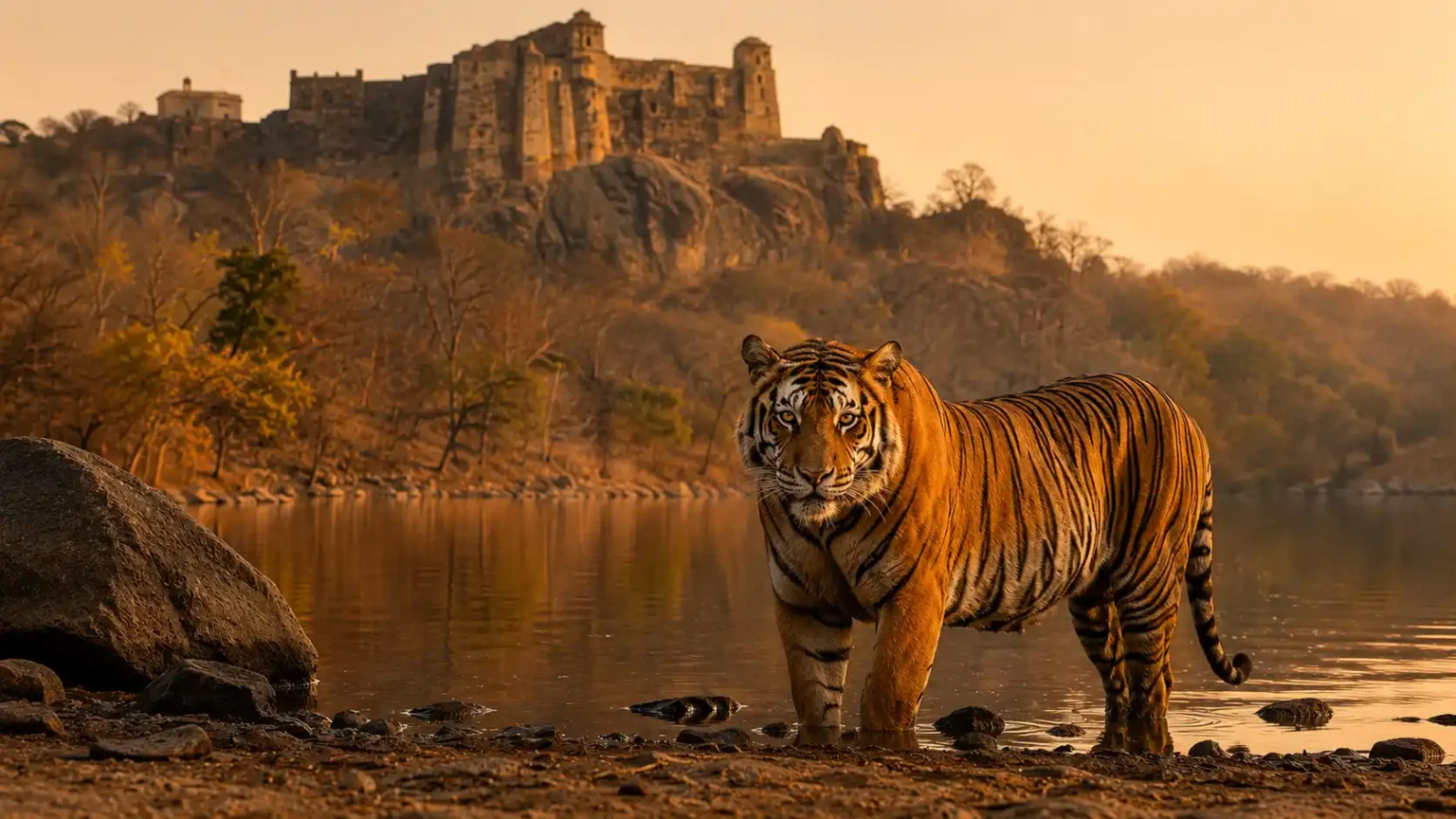

At 5:50 AM in Zone 2 of Ranthambore, the jeep engine cuts out. Your naturalist puts a single finger to his lips. Forty metres ahead, a Bengal tiger sits in the middle of the track and stares back at you like you interrupted something important. That moment costs nothing extra. But getting yourself into that zone, at that time, with that guide — that’s what this 5-day itinerary is actually about.
This is not a trip for people who want to “try” a safari. Corbett and Ranthambore together give you India’s two best tiger reserves, two very different landscapes, and a realistic shot at wild tiger sightings across multiple zones — provided you plan the logistics correctly. Most people don’t. They book the wrong zones, travel on the wrong days, and miss what both parks do best.
Here’s how to do it properly.
Corbett vs Ranthambore: Why a Combined Wildlife Trip Gives You More Than Either Park Alone
Both parks sit in India’s “tiger belt,” but they are not interchangeable experiences.
Jim Corbett (Uttarakhand) runs through the Terai foothills of the Himalayas. The terrain is dense sal forest and grassland riverine. Tiger sightings here require patience — Corbett is larger (over 1,300 sq km) and the vegetation is thick. What it gives you instead are volume: elephants, gharials in the Ramganga river, leopards, and one of India’s richest bird lists.
Ranthambore (Rajasthan) is drier and more open, and its tigers are more habituated to vehicles. Zones 1–5 are the oldest and most photographed; Zones 6–10 (added later) are less crowded and still productive. The ruined 10th-century fort sitting inside the park adds a backdrop no other Indian reserve can match.
Pairing them over 5 days makes sense because they are 8–9 hours apart by road (or a manageable train connection), serve different wildlife experiences, and together give you 4 game drives — which is the realistic minimum to tip tiger sighting probability in your favour.
Who should do this trip: Photographers, first-time safari visitors who want genuine odds on tigers, and anyone who would rather watch animals than monuments.
Who should skip: Families with children under 6 (jeep safari rules restrict this), travellers who want full resort comfort — budget here matters.
Corbett and Ranthambore 5 Day Itinerary: Day-by-Day Safari Plan from Delhi
Day 1 — Delhi to Jim Corbett (Dhikala or Bijrani Zone)
Travel time: 5–6 hours by road from Delhi (NH9 via Moradabad). The train to Ramnagar station is faster and more reliable — the Jan Shatabdi from Delhi departs at 6:10 AM and arrives by 11:30 AM.
Check in, eat, rest. Do not try to squeeze in an afternoon drive on Day 1 unless you specifically booked one in advance — Corbett’s gates require permits issued by the Forest Department, and same-day walk-in bookings are unreliable.
Zone pick for Corbett: book Dhikala if an overnight stay inside the buffer is possible (very limited cottages, book 90 days ahead). If not, the Bijrani or Jhirna zones are the better day-visitor zones — Jhirna stays open year-round while most others close May–October.
Day 2 — Full Day in Corbett: Two Safaris
This is your main Corbett day. Morning and evening drives from the same zone.
Morning drive (6:00–9:30 AM): Peak activity window. Elephants are most visible near water in early light. Spotted deer and sambar are everywhere — pay attention when herds scatter or alarm call, as this often signals a predator nearby.
Evening drive (3:00–6:00 PM): Better for leopard sightings than tigers in most Corbett zones. Jhirna and Bijrani have consistent leopard movement along the forest edges in the last hour of light.
Honest tiger expectation in Corbett: Lower probability than Ranthambore, not zero. Corbett’s tiger density is roughly 215 tigers in 1,300+ sq km. Your best odds are in Dhikala zone along the Ramganga, but even seasoned naturalists go multiple visits between sightings. Come for the ecosystem, not just the cat.
Cost (per jeep, 6-seater): Morning drive approx ₹3,500–₹5,000 + ₹600–₹800 per person forest entry fee. Private jeep for 2 people: budget ₹7,000–₹9,000 total for two drives.
Day 3 — Corbett to Ranthambore
This is the logistics day people underestimate. The distance is roughly 580 km.
Recommended route: Ramnagar → Moradabad → Jaipur → Sawai Madhopur. Road takes 9–10 hours. Better option: train from Ramnagar or Moradabad to Sawai Madhopur — the Dehradun-Sawai Madhopur Express runs this route but check live schedules as it operates on select days.
If you want to avoid a punishing travel day, spend night 3 in Jaipur (halfway point) and reach Ranthambore fresh on Day 4 morning. This sacrifices one Ranthambore evening drive but saves you arriving exhausted.
Sawai Madhopur arrival time target: Before 5:00 PM to complete zone permit formalities and settle in before your Day 4 morning drive.
Day 4 — Full Day in Ranthambore: Two Safaris
Your peak day. Two drives, same zone if possible.
Zone selection matters more here than in Corbett. Zones 2, 3, and 4 have the highest historic tiger sighting frequency. Zone 3 (around Rajbagh and Padam Lake) is the most consistent for open sightings because the terrain is flat and tigers cross between lakes. Zone 1 covers the main lake area but gets the most tourist traffic.
If you book via the official RTDC portal (rtdchotels.com) or through your resort, zones are assigned — not fully chosen. Ask your resort to flag which zones they can prioritise when making your booking. Resorts with a Forest Department relationship can sometimes influence this.
Canter vs jeep: The park runs two vehicle types — six-seater jeeps and 20-seater canters. Book a jeep. It costs more (approx ₹2,500–₹3,500 per jeep vs ₹800–₹1,200 per canter seat) but you get faster movement, lower noise, and a guide who can stop and reposition without negotiating with 19 other passengers.
Morning drive (6:30 AM–10:00 AM): October through March. If visiting April–June (before monsoon), drives start at 6:00 AM.
Afternoon drive (2:30 PM–6:00 PM): More likely for zone 3 and 4 big cat sightings in evening hours.
What to realistically expect: Ranthambore has around 70–75 tigers across its zones. On a two-drive day with a decent zone, experienced travellers put tiger sighting probability at 50–65% per drive — higher than almost anywhere else in India. This is not a guarantee. It is, however, the best odds you’ll find at a functioning Indian tiger reserve open to general tourists.
Day 5 — Morning Safari + Departure
One final morning drive before checkout and departure.
This drive matters. Many first-time visitors skip it to “get a head start” on the journey home. That’s a mistake — morning drives are statistically the most productive for sightings, and you have already paid for the zone permit in most packages.
After the drive, it’s roughly 4.5 hours to Jaipur airport (flights to Delhi, Mumbai) or 5.5 hours to Delhi by road. Train from Sawai Madhopur to Delhi Hazrat Nizamuddin (Rajasthan Sampark Kranti Express) takes 4.5–5 hours — more comfortable than road for a tired traveller.
Corbett and Ranthambore 5 Day Trip Cost
These are honest mid-range numbers per couple (2 people sharing a jeep and room). Not a budget guesthouse, not five-star.
| Item | Cost (INR) |
|---|---|
| 2 nights mid-range resort, Corbett | ₹8,000–₹14,000 |
| 2 safari drives, Corbett (jeep + fees) | ₹12,000–₹16,000 |
| 2 nights resort, Ranthambore | ₹10,000–₹18,000 |
| 3 safari drives, Ranthambore (jeep + fees) | ₹14,000–₹20,000 |
| Travel (trains + road transfers) | ₹4,000–₹7,000 |
| Meals (resort + roadside) | ₹4,000–₹6,000 |
| Total estimate | ₹52,000–₹81,000 |
If you are a solo traveller or a group of 3–6, costs per person drop significantly once split across jeep hire. Luxury resort rates (Aman, Taj Sawai Madhopur) can push this budget to ₹2–3 lakh easily.
Note: Safari permit costs and zone availability change seasonally — verify current rates at rajasthanwildlife.in and the Uttarakhand Forest Department portal before booking.
Best Time to Visit Corbett and Ranthambore for a Wildlife Trip
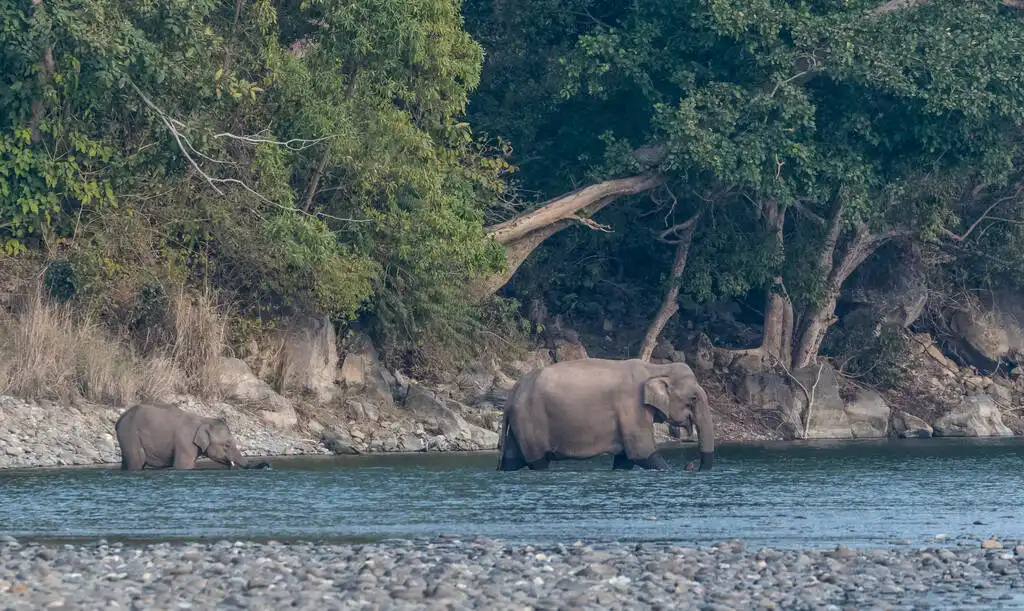
October–November: Both parks open after monsoon. Vegetation is lush, animals are well-fed and harder to spot. Good for atmosphere and birds.
December–February: Best all-round months. Cool mornings, clear skies, tigers more active. Ranthambore tiger sightings peak here. Corbett is excellent for elephants and raptors.
March–April: Optimal. Dry season thins vegetation, animals concentrate near water, and tiger sightings hit their annual peak in both parks. Book 60–90 days ahead — this is peak demand.
May–June: Very hot (40–45°C in Ranthambore). Most Corbett zones close May 15. Ranthambore stays open until June 30. Only for heat-tolerant visitors with specific reasons to travel then.
July–September: Monsoon. Both parks largely closed.
Corbett Ranthambore Trip Planning: Three Safari Mistakes
1. Book zone permits before you book flights. Ranthambore’s online booking system (rajasthanwildlife.in) opens 90 days ahead and popular zones sell out in hours. Your resort cannot guarantee a zone if you book late. Fix the safari first, then book everything around it.
2. Your naturalist matters more than your zone. A good naturalist in Zone 5 will out-perform a poor one in Zone 3. Ask your resort for their senior guide by name when booking — any reputable property will tell you who their best person is.
3. Don’t plan anything on travel day (Day 3). Every itinerary online squeezes a half-drive into the Ranthambore arrival evening. It sounds efficient. In practice, delayed trains, road traffic on NH48, and permit queue time mean you either miss the drive or start it exhausted. Build the travel day as a buffer. You’ll use it.
For a Corbett and Ranthambore wildlife photography trip, zone selection and shooting window matter more than camera gear.
In Corbett, Dhikala zone gives you open grassland along the Ramganga with clean backgrounds that the dense sal forest in other zones simply does not allow.
In Ranthambore, Zone 3 at Padam Lake is the strongest photography zone in India for tigers, with flat terrain, water reflections, and the fort ridge as a natural backdrop.
Carry a 400 to 500 mm lens, a beanbag over the door frame instead of a tripod, and two spare batteries since cold December mornings drain them 40 percent faster than rated. Book a private jeep in both parks. The extra Rs. 3,500 to 4,500 per drive lets you stop and reposition without five other passengers overruling the call.
| Drive | Best Shooting Window | Top Subject | Zone to Book |
|---|---|---|---|
| Corbett morning | 6:00 AM to 8:00 AM | Elephants, gharials, birds | Dhikala |
| Corbett evening | 4:30 PM to 6:00 PM | Leopard at forest edge | Bijrani |
| Ranthambore morning | 6:30 AM to 8:30 AM | Tiger at lake crossing | Zone 3 |
| Ranthambore evening | 3:30 PM to 5:30 PM | Tiger approaching water | Zone 2 or 4 |
If you are planning this trip specifically for photography, read our full breakdown of a 5-day wildlife photography trip in December under Rs. 50,000.
Frequently Asked Questions
Can I see tigers at both Corbett and Ranthambore on this trip?
Yes, but Ranthambore gives you significantly better odds. Jim Corbett’s tigers are real and present, but the park is dense and large — sightings are rarer. Ranthambore’s more open terrain and habituated tigers make it the more reliable park for a confirmed sighting. Budget your expectations accordingly: Corbett for ecosystem, Ranthambore for the tiger.
Is 5 days enough for both parks, or should I extend?
Five days is the practical minimum for a meaningful visit to both. If you can extend to 6 or 7 days, add a day to Ranthambore (one extra drive). Adding days to Corbett is less impactful on tiger sighting probability. The sweet spot for a serious wildlife trip is 7 days total.
What is the best way to travel between Corbett and Ranthambore?
The train is better than the road on this leg. An overnight train from Ramnagar or Moradabad to Sawai Madhopur saves daylight hours you’d otherwise spend in a car. Check IRCTC for the Dehradun–Sawai Madhopur or Delhi–Sawai Madhopur services running on your dates.
Can I book Ranthambore safari permits myself, or do I need a resort?
You can book directly at rajasthanwildlife.in — and you should, since this locks your zone. Resorts also book on your behalf, but do not assume they have done it until you see the confirmed permit number. Follow up.
Is this trip suitable for families with kids?
Ranthambore allows children of all ages in canters (20-seater vehicles). Jeeps in Ranthambore and most Corbett zones have a minimum age of 5–6 years depending on the zone. Check specific zone rules when booking. Very young children can find early-morning 3.5-hour drives difficult regardless of rules.